Can a Previous Overstay Affect Your Thailand DTV Visa Application in 2026?
A previous overstay does not automatically mean a DTV visa rejection. The real risk is usually overstay combined with weak documents, unclear proof or officer doubts.
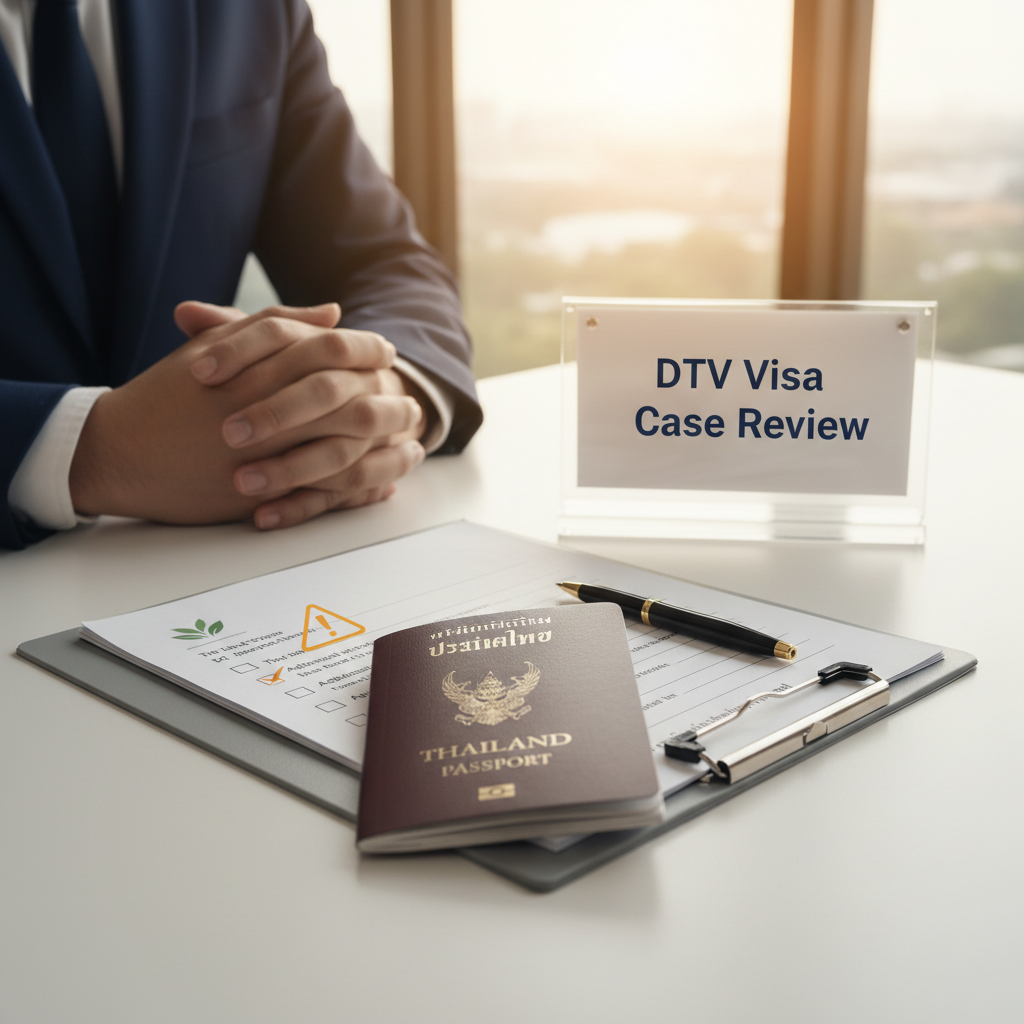
Many applicants contact us with the same concern: can I apply for a Thailand DTV Visa if I previously overstayed in Thailand?
The honest answer is: often yes, but it depends on the full case. A previous overstay does not automatically mean your Destination Thailand Visa application will be rejected. In many normal cases, a short overstay that was paid and properly resolved is not the only reason for refusal.
However, it can become a serious problem when it is combined with other weak points in the application. That is the key message applicants should understand before submitting.
The simple rule
A short previous overstay is rarely the only reason for rejection. But overstay + weak documents + unclear story + officer doubts can quickly become a high-risk application.
Can You Apply for a Thailand DTV Visa After an Overstay?
Yes, many applicants can still apply for the Thailand DTV Visa after a previous overstay. But the risk level depends on several details:
- how many days the overstay lasted
- whether it was paid and recorded correctly
- whether it happened once or multiple times
- whether there was any arrest, entry restriction or serious immigration issue
- how recent the overstay was
- which DTV category you are applying under
- how strong the rest of your application is
This is why we do not give generic answers like "no problem" or "automatic rejection". Immigration history is always case-by-case.
A person with a 2-day accidental overstay, a clean travel history and strong remote work documents is not the same as someone with repeated overstays, unclear work proof and weak financial documents.
What Counts as an Overstay in Thailand?
An overstay happens when you remain in Thailand beyond the permitted stay date shown in your passport stamp or immigration record.
For example, if your entry stamp allowed you to stay until 10 March, but you left Thailand on 14 March, you overstayed by 4 days.
Short overstays can happen for different reasons:
- flight changes
- misunderstanding the entry stamp
- medical issues
- late visa extension planning
- travel delays
- confusion between visa validity and permitted stay
- calculating the last permitted day incorrectly
Thailand treats overstay seriously, but not every overstay situation is the same. For DTV visa purposes, the important question is how the previous overstay looks together with the current application.
Short Overstay vs Serious Overstay
Not all overstays are viewed the same way in practice. There is a major difference between a short, paid, accidental overstay and a serious immigration issue.
Lower-risk overstay situations may include:
- a short overstay of a few days
- the overstay was paid at the airport or immigration
- there was no arrest
- there was no entry ban or serious immigration restriction
- it happened only once
- the applicant can explain it simply and honestly
Higher-risk overstay situations may include:
- a long overstay
- repeated overstays
- being arrested while on overstay
- an overstay connected to unauthorised local work
- a previous entry restriction
- recent immigration problems
- an applicant who cannot explain what happened
If your overstay falls into a higher-risk situation, you should not submit a DTV application without reviewing the full case first.
The Real Risk: Overstay + Weak DTV Application
The biggest mistake is thinking the officer looks only at the overstay. In reality, the officer looks at the whole application.
The DTV application must prove that you genuinely qualify for the category you selected. For many applicants, this means proving remote work, freelancer activity, business ownership, Soft Power participation, or family relationship clearly.
If the rest of your application is strong, a short past overstay may not become the main issue. But if the officer already has doubts, the overstay can add weight to those doubts.
Common weak points include:
- unclear remote work documents
- no proper employer letter
- weak freelancer proof
- screenshots instead of official documents
- unclear financial evidence
- inconsistent dates between documents
- wrong DTV category selection
- weak Soft Power documents
- unclear current location proof
- poorly written explanation letters
- documents that do not match the story
One small question mark may be manageable. Several question marks together can create doubt. Several question marks plus a previous overstay can create a real rejection risk.
Example 1: Short Overstay + Strong Application
Imagine an applicant overstayed by 3 days because of a changed flight. The overstay was paid correctly at departure, and the applicant has no other immigration issues.
They apply for the DTV under the remote work route. Their file includes:
- a clear passport copy
- proper proof of current location
- strong financial evidence
- employment contract from a foreign company
- employer certificate confirming remote work
- recent payslips or payment proof
- consistent travel dates
- a short and professional explanation where needed
In this situation, the short overstay may not be a major issue because the application is clear, credible and easy to approve.
Example 2: Short Overstay + Weak Application
Now imagine another applicant with the same 3-day overstay. But their application includes unclear freelancer proof, no proper contracts, weak bank statements, missing explanation, and documents that do not match each other.
In that case, the overstay becomes more important. Not because 3 days automatically means rejection, but because the officer already has several reasons to doubt the application.
This is how many refusals happen. It is not always one big mistake. Sometimes it is many small weaknesses combined.
Should You Explain a Previous Overstay?
This depends on the case, the embassy, the form questions and the facts. The safest principle is simple:
Never lie and never hide important immigration history if you are directly asked about it.
If the overstay is visible in your passport or immigration record, the officer may already see it. A short, factual and respectful explanation can sometimes be better than ignoring the issue or trying to over-explain it.
A good explanation should usually be:
- short
- factual
- respectful
- consistent with passport stamps
- clear that the overstay was resolved
- clear that it will not happen again
A bad explanation can create new problems. Avoid blaming immigration, sounding defensive, adding irrelevant details or creating contradictions with your documents.
How to Make Your DTV Application Stronger After an Overstay
If you have a previous overstay, your goal is to remove doubts from the rest of the application. Your file should be clean, organized and easy to understand.
1. Choose the right DTV category
Remote worker, freelancer, business owner, Soft Power applicant and dependant applications need different proof. Choosing the wrong route can create unnecessary risk.
2. Make your work proof strong
Remote work applicants should prepare clear employment or business evidence. Freelancers should show real clients, invoices, payments, portfolio or business activity. A vague job description is not enough in a sensitive case.
3. Make your financial evidence easy to verify
Bank documents should be official, readable and consistent. Avoid cropped screenshots, unclear account names, missing dates or documents that do not clearly show the required information.
4. Avoid contradictions
Your passport, application form, work documents, bank statements, travel plan and explanation should all tell the same story. Contradictions are dangerous when there is already an overstay in the background.
5. Use a professional explanation when needed
A sensitive case should not rely on a generic template. The wording should match the facts and avoid creating new doubts.
What We Check Before Advising You
If you had a previous overstay and want to apply for the DTV visa, Thai DTV Visa can review your situation before submission.
We usually need to understand:
- when the overstay happened
- how many days it lasted
- whether it was paid and recorded
- whether it happened once or multiple times
- whether there was any arrest, entry restriction or serious issue
- which DTV category you want to use
- where you plan to apply
- what documents you currently have
- when you plan to travel to Thailand
After that, we can explain what looks safe, what looks weak and what should be improved before applying.
Final Advice: Do Not Panic, But Do Not Apply Carelessly
A previous short overstay does not automatically destroy your DTV visa chances. In many cases, it is possible to apply successfully if the overstay was short, paid correctly and not connected to any serious immigration problem.
But the application must be strong. The biggest risk is not usually the overstay alone. The biggest risk is overstay combined with weak documents, unclear proof and officer doubts.
If there is already one negative point in your immigration history, do not add more question marks to the file.
Had a previous overstay in Thailand?
Send us your situation before you apply. We will review your DTV case, identify weak points and help you understand the safest way forward.
We usually respond within 24 hours, and in most cases much faster.
Important note: Final visa approval, additional document requests and entry decisions are made solely by the Royal Thai Embassy, Consulate or Thai immigration authority reviewing the case. Thai DTV Visa provides case review, document preparation and application support only. We do not guarantee visa approval or any specific immigration decision.
Frequently Asked Questions
Can I apply for a Thailand DTV Visa after an overstay?+−
Will a short overstay cause a DTV visa rejection?+−
Should I explain my previous overstay?+−
Is repeated overstay more serious?+−
How can Thai DTV Visa help if I had an overstay?+−
Explore DTV Visa Resources
Had a previous overstay in Thailand?
We can review your DTV case before you apply and help identify whether your documents are strong enough.