Thai DTV Visa: What to Do If the Embassy Asks for Additional Documents or Questions
Received additional questions or a document request from the Thai embassy after your DTV visa application? Find out what to do, what mistakes to avoid, and how Thai DTV Visa can help you respond correctly.
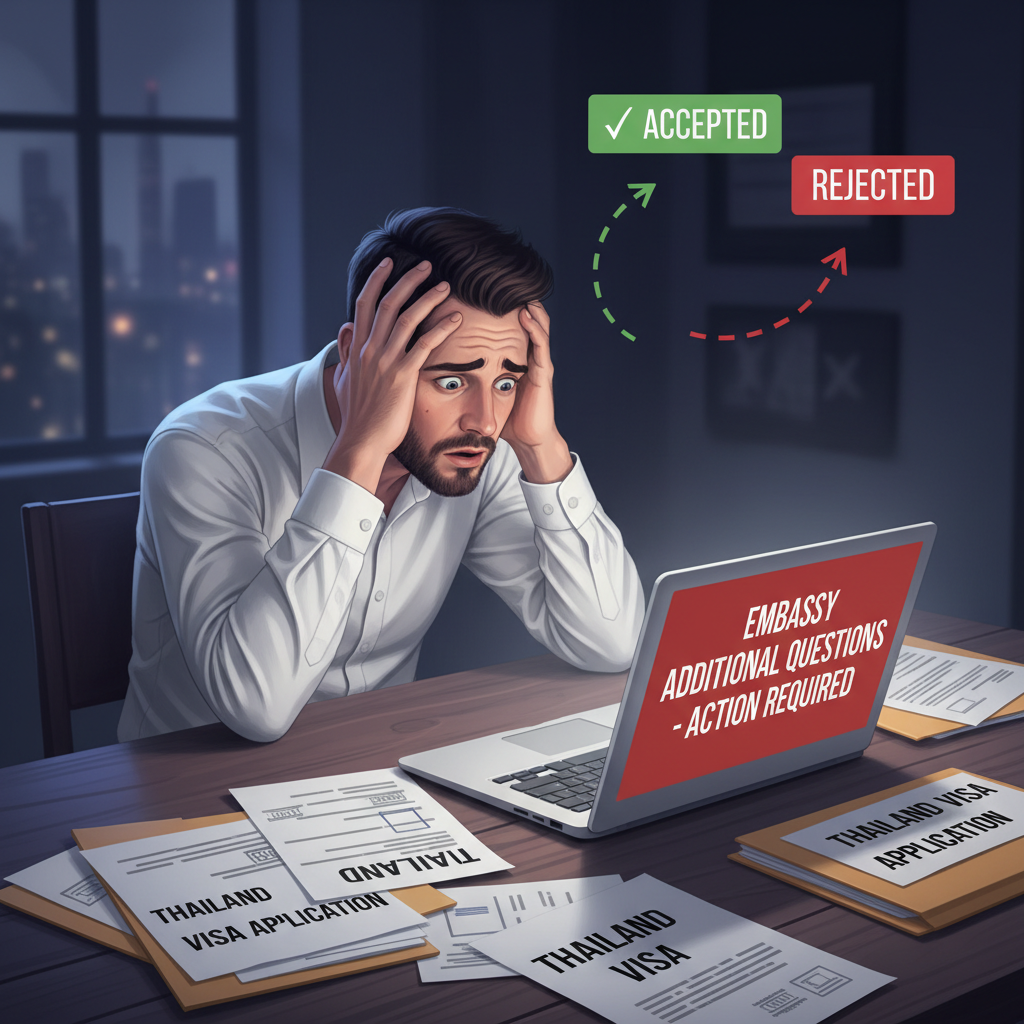
Receiving an additional document request or follow-up questions from the Thai embassy after submitting your DTV visa application does not automatically mean your application has been rejected. However, it does mean the application has reached a sensitive stage — one where the next answer must be handled with great care.
Many applicants become nervous because they do not know whether the embassy is simply clarifying a detail or whether the entire application is at risk. In reality, both can be true depending on how you respond.
This article explains why these requests happen, what mistakes to avoid, and how Thai DTV Visa can help you respond correctly when the embassy asks for more information.
Why Do Thai Embassies Ask Additional Questions?
Thai embassies may ask for additional information when they need to better understand the applicant's situation before making a final decision. This can relate to:
- Financial background and bank statement details
- Employment status or proof of remote work
- Freelance or business activity and client relationships
- Portfolio or work evidence
- Updated bank statements or proof of funds
- Clarification about current location
- Travel history or previous visa history
- Purpose of stay and duration plans
- Additional proof related to soft power activities
- Questions about why the applicant is applying from a specific country
- Clarification or expansion of documents already submitted
This does not always mean something is wrong. Sometimes the embassy simply needs more detail to complete their review. However, how you respond is critically important.
Why This Stage Is So Important
Once the embassy has asked additional questions, the application is no longer a routine submission. The case is being actively reviewed, and the embassy is looking for a clear, logical, and complete answer.
Poor responses can create red flags. Applicants often make costly mistakes at this stage because they panic, answer too quickly, send random documents, over-explain unnecessary details, contradict their original application, or provide weak evidence that raises more questions than it answers.
As we say to every client in this situation:
"At this stage, the goal is not just to answer. The goal is to answer correctly, clearly, and in the right order."
Common Mistakes When Answering Embassy Questions
Sending incomplete documents
Sending only part of what was requested — or documents that are outdated, unclear, or unsigned — can make the case weaker rather than stronger. Every document you submit at this stage should directly support the embassy's specific request.
Answering too casually
Embassy communication should be professional, structured, and clear. A short, informal reply that does not address the embassy's exact question may create the impression that the applicant is not taking the process seriously.
Giving contradictory information
Your answer must be consistent with your original application, the documents you already submitted, and your actual real-life situation. Any contradiction — even a small one — can damage your credibility at this stage.
Uploading random documents without explanation
More documents are not always better. Documents should be organized, relevant, and supported by a brief professional explanation when needed. Sending a large file of unrelated documents can cause confusion rather than confidence.
Waiting too long to react
Delays in responding can signal uncertainty and may reduce the time you have to prepare a proper, thoughtful response. Act quickly — but not so quickly that you send a poor answer.
Trying to guess what the embassy wants
Guessing can be dangerous at this stage. The response should be based on the exact request, the applicant's specific case, and a clear understanding of what the embassy is actually asking. If you are not sure, get professional help before responding.
Can Additional Questions Lead to Rejection?
Yes, they can. If the answer is weak, unclear, incomplete, or creates more doubts, the embassy may reject the DTV visa application.
However, an additional document request can also be a positive sign. It means the embassy has not immediately rejected the application — they are giving you an opportunity to clarify your situation.
Important
"An additional document request is not a rejection. It is an opportunity to fix, clarify, and strengthen the application — but only if handled correctly."
This is the moment that separates a successful application from a failed one. The right response can strengthen your case. The wrong response can end it.
How Thai DTV Visa Can Help
Thai DTV Visa helps applicants who have already submitted their DTV visa application and have then received additional questions or document requests from the embassy.
We can help with:
- Reviewing the embassy's exact request carefully
- Understanding what the embassy is really asking for
- Checking the documents you originally submitted
- Identifying weak points or possible red flags in your case
- Preparing a clear response strategy
- Organizing and selecting the right supporting documents
- Drafting a professional explanation letter if needed
- Helping reduce the risk of rejection at this final stage
Every case is different. The response must be prepared based on the exact embassy request and the applicant's individual situation — not a generic template.
Received Additional Questions From the Embassy?
If the Thai embassy has asked you for more documents or additional information, do not rush your answer. Contact Thai DTV Visa and let us review the request before you respond.
We usually respond within 24 hours, and in most cases much faster.
What Should You Do Immediately After Receiving Embassy Questions?
Follow this practical checklist before you respond:
- Do not panic. A request for additional information is not the same as a rejection.
- Do not answer immediately without reading and understanding the full request.
- Read the embassy message carefully — more than once, and in full.
- Compare the request with the documents you already submitted.
- Check whether your answer could contradict your original application.
- Prepare your documents in a clear and logical order, selecting only what is directly relevant.
- Write a short professional explanation if the request requires context or clarification.
- Ask for professional help before submitting if you are unsure about any part of the response.
Remember: once the answer is submitted, there may not be another chance to fix mistakes. Take the time to get it right.
Who Should Contact Thai DTV Visa?
Contact Thai DTV Visa if any of the following apply to you:
- You have already applied for a DTV visa
- The embassy asked for additional documents
- The embassy sent additional questions about your application
- You are unsure how to answer the embassy's request
- You are worried about rejection at this stage
- You previously had a visa application rejected
- You applied by yourself and now need professional support
- You used another agency but are not confident in their guidance for the next step
- You want a professional review of your planned response before you submit it
It does not matter whether your application was straightforward or complex. If you are at this stage and you are not confident, it is better to ask for help than to risk a rejection at the final stage.
Final Thoughts
Receiving additional questions from the Thai embassy is stressful — but it is not the end of your application. Many applicants successfully clear this stage and go on to receive their DTV visa.
The most important thing is to respond correctly, professionally, and with the right supporting evidence. Professional help at this stage can reduce the risk of mistakes, improve the clarity of your response, and give your application the best possible chance of success.
Thai DTV Visa cannot guarantee visa approval — that decision belongs to the Royal Thai Embassy. But we can help make sure your response is as strong, clear, and well-prepared as it can be.
Important note: Final visa approval and all decisions regarding additional document requests are made solely by the Royal Thai Embassy or Consulate reviewing your application. Thai DTV Visa provides document preparation and application support only. We do not guarantee visa approval.
Frequently Asked Questions
What does it mean if the Thai embassy asks for additional documents?+−
Can additional embassy questions lead to DTV visa rejection?+−
What should I do first when I receive embassy questions?+−
Can Thai DTV Visa help after I have already submitted my application?+−
How quickly does Thai DTV Visa respond?+−
Explore DTV Visa Resources
Did the Embassy Ask You for More Documents?
Do not respond without professional guidance. Contact Thai DTV Visa and let us review the request before you answer.