Should You Apply for a Thailand DTV Visa Locally or Abroad?
Not sure whether to apply for your Thailand DTV Visa from your home country or while travelling abroad in Asia? This guide explains the pros, cons, risks, and best approach — especially for Soft Power applicants.
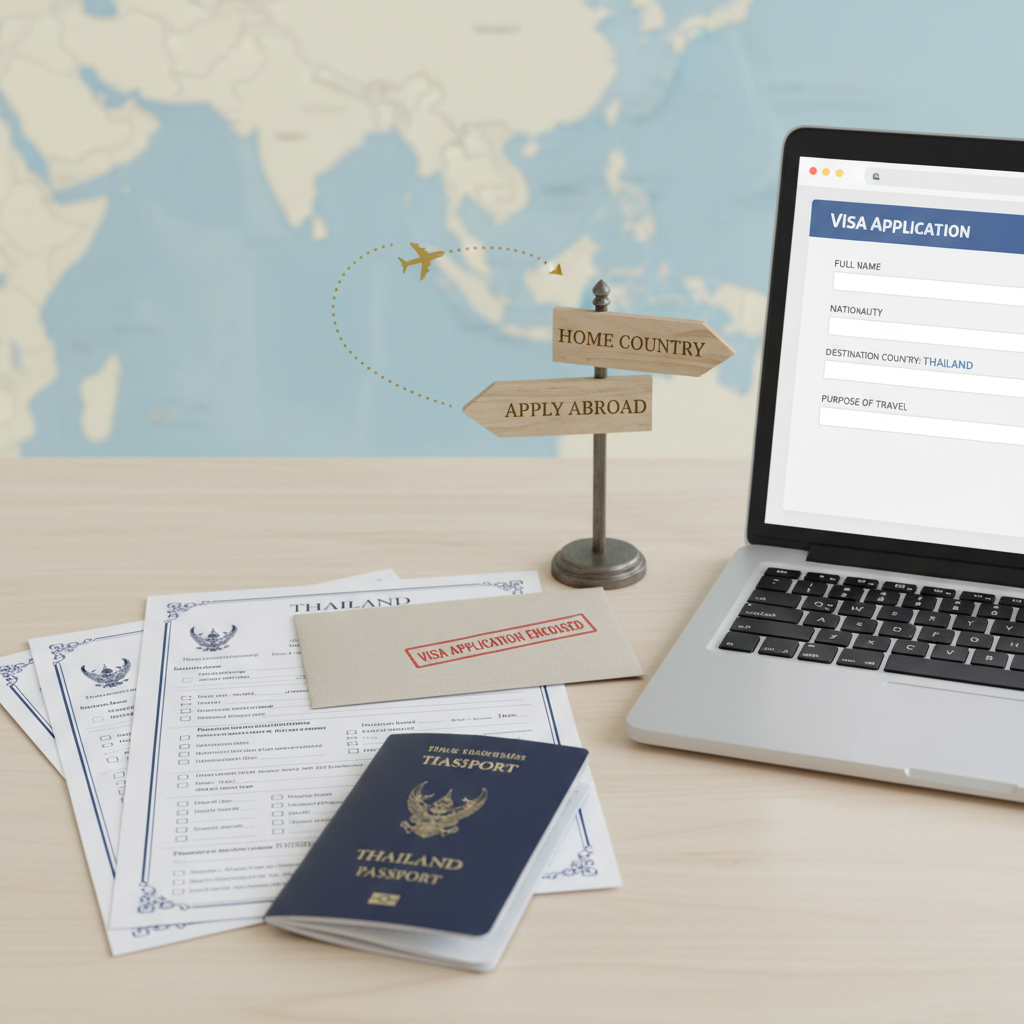
One of the most common questions we receive from applicants is: Should I apply for my Thailand DTV Visa in my home country, or should I apply abroad while already travelling in Asia?
The answer depends on your nationality, current location, visa category, documents, travel plans, and the Thai Embassy or Consulate handling your application.
However, there is one important point we want to make clear from the beginning.
Because the Soft Power category has become stricter, especially in Vietnam and particularly in Hanoi, we recommend applying for the DTV Visa in your home country whenever possible if you are applying under a Soft Power route such as Muay Thai, Thai cooking, medical treatment, seminars, or other approved activities.
Applying from your home country is usually cleaner, easier to explain, and often less risky. Your residence, financial background, personal situation, and document history are usually easier for the embassy to understand.
That said, if applying from your home country is not possible, you still have options. We have experience and knowledge in helping applicants apply successfully in Asia as well. The key is choosing the right location, preparing the documents correctly, and understanding what embassies may ask for before you submit your application.
What Does "Locally" and "Abroad" Mean?
When we say applying locally, we usually mean applying from your home country or from a country where you legally live or hold long-term residence.
For example:
- A German citizen applying from Germany
- An Estonian citizen applying from Estonia or the responsible Thai Embassy for Estonia
- A French citizen applying from France
- A UK citizen applying from the United Kingdom
- A long-term resident applying from the country where they legally live
When we say applying abroad, we mean applying from another country while travelling, usually somewhere in Asia.
For example:
- Applying from Vietnam
- Applying from Laos
- Applying from Cambodia
- Applying from Malaysia
- Applying from Indonesia
- Applying from another country where you are temporarily staying
For most DTV applicants, this question matters because Thai visa applications are reviewed by the embassy or consulate responsible for the country where the applicant is applying from.
Why the Application Location Matters
Many applicants think that DTV Visa requirements are exactly the same everywhere. The main requirements may look similar, but in practice, different embassies can review applications differently.
Some embassies may ask for extra documents. Some may be stricter with Soft Power applications. Some may want stronger proof of current location. Some may ask more questions if you are applying from a country where you are only temporarily staying.
This is why choosing where to apply is not just a small technical detail. It can affect the whole process.
Your application location can influence:
- How your documents are reviewed
- What additional documents may be requested
- How easy it is to prove your current location
- How your financial documents are understood
- How risky your Soft Power application may appear
- How flexible your travel plans need to be
Applying for the DTV Visa in Your Home Country
Applying from your home country is often the safest and most straightforward route, especially for Soft Power applicants.
Pros of Applying Locally
1. Lower Risk for Soft Power Applications
If you are applying under the Soft Power category, applying locally is usually the better option. Your application often looks more natural because your documents, bank statements, address, employment history, tax records, and personal background are easier to connect to your home country. This is especially important now that Soft Power applications are being checked more carefully in some locations.
2. Easier Proof of Current Location
DTV applications normally require proof of current location. When you apply from your home country, this is usually easier to provide. You may have utility bills, residence documents, bank letters, employment documents, tax records, local address proof, or other documents connected to your country of residence. When applying abroad, current location proof can become more complicated, especially if you are staying in a hotel or short-term accommodation.
3. Stronger Financial Story
Financial proof is one of the most important parts of a DTV application. When applying locally, your bank statements and income history are often easier to understand. If your salary, business income, savings, tax records, and bank account are all connected to your home country, the application looks more consistent.
4. Easier Communication
Applying from your home country can also make communication easier if the embassy asks for additional documents. You may be able to provide missing documents faster, contact local institutions more easily, and explain your personal situation more clearly.
5. Better for Families and Dependents
If you are applying with a spouse or children, applying locally can be much easier. Marriage certificates, birth certificates, translations, financial documents, and family records are usually easier to prepare and verify in your home country or country of residence.
Cons of Applying Locally
1. It May Take More Time
Some applicants may experience longer processing times in their home country, depending on the embassy and workload.
2. You May Need to Return Home
If you are already travelling in Asia, returning home may be expensive and inconvenient. Flights, accommodation, and time away from Thailand can make this option less practical.
3. Local Does Not Mean Automatic Approval
Applying from your home country does not guarantee approval. Your documents still need to be strong, complete, and consistent.
Applying for the DTV Visa Abroad in Asia
Applying abroad can still work, but it needs to be done carefully. For many long-term travellers, digital nomads, and applicants already in Asia, applying abroad may be the only realistic option.
Pros of Applying Abroad
1. Practical if You Are Already in Asia
If you are already near Thailand, applying from a nearby country may be more convenient than flying back to your home country. This can be useful for applicants who are already travelling, working remotely, or staying in Southeast Asia.
2. Possible When Returning Home Is Not an Option
Some applicants cannot easily return to their home country. They may be travelling long-term, living abroad, or simply need to apply before entering Thailand. In these cases, applying abroad may be the most realistic route.
3. It Can Be Faster in Some Cases
Some embassies may process applications faster than others. However, this should never be assumed. If the embassy requests additional documents, the process can take longer than expected.
4. Good Option With the Right Strategy
Applying abroad can be successful when the application is prepared properly. The most important parts are choosing the right country to apply from, making sure the embassy accepts your type of application, preparing strong proof of current location, submitting clear financial documents, and being ready for possible additional questions.
Cons of Applying Abroad
1. Higher Risk of Additional Questions
When you apply from a country where you are only temporarily staying, the embassy may look more closely at your application. They may ask why you are applying from this country, how long you have been there, whether you can prove your current location, and whether your documents are consistent. This does not mean your application will be rejected, but it does mean your file must be stronger.
2. Soft Power Applications Can Be More Difficult
Soft Power applications can be more sensitive when applying abroad. This is especially true in locations where embassies have recently become stricter with Soft Power cases. Based on our experience, Vietnam — especially Hanoi — has become more difficult for Soft Power applications. That is why we recommend applying from your home country whenever possible if you are applying through Muay Thai, Thai cooking, medical treatment, or another Soft Power route.
3. Proof of Current Location Can Be Challenging
If you apply abroad, you must be able to prove that you are actually in the country where you submit the application. Depending on the embassy, useful documents may include your entry stamp, hotel booking, accommodation receipt, local rental agreement, flight ticket, local visa or permission to stay, or other proof showing that you are legally present there. Weak or unclear proof of current location can lead to delays or additional questions.
4. Travel Plans Can Be Disrupted
If the embassy asks for extra documents, you may need to stay longer in the country where you applied. This can affect flights, hotels, Thailand entry plans, and personal schedules.
5. Embassy Requirements Can Change
DTV handling can change from country to country. What worked before may not always work now. This is why it is important to check the latest local requirements before applying.
Soft Power Category: Why You Need to Be More Careful
The Soft Power category is popular because it allows applicants to qualify through approved Thailand-related activities.
This may include:
- Muay Thai training
- Thai cooking classes
- Sports training
- Medical treatment
- Seminars
- Cultural activities
- Other eligible Soft Power activities
However, because this route has become popular, embassies are now reviewing these applications more carefully. For example, if you apply through Muay Thai, the embassy may want to see that the gym is legitimate, the course is real, the course duration makes sense, the documents are properly issued, the applicant has a genuine reason to train in Thailand, and the application is not only a weak attempt to get long-term stay without proper supporting documents. This is why choosing the right provider and preparing a complete document package is very important.
Our General Recommendation for Soft Power Applicants
If you are applying under the Soft Power category — including Muay Thai, Thai cooking, or medical treatment — apply from your home country whenever possible. This is currently the safer and more stable route for most applicants.
Local vs Abroad: Quick Comparison
Applying Locally — Best For:
- Soft Power applicants (Muay Thai, Thai cooking, medical)
- Families with dependents
- Applicants with strong home country documents
- Applicants who want the safest route
- People who can wait before travelling to Thailand
Main advantages: Cleaner application story, easier proof of current location, stronger document consistency, lower risk of questions about applying from a third country.
Main disadvantages: May take more time, may require returning home, still requires strong documentation.
Applying Abroad — Best For:
- Long-term travellers and digital nomads already in Asia
- Applicants who cannot return home
- People with flexible travel plans
- Applicants with strong documents and the right strategy
Main advantages: Practical if already abroad, may avoid expensive travel back home, can work well with proper preparation.
Main disadvantages: Higher risk of extra questions, current location proof can be more difficult, Soft Power applications may be more sensitive, travel plans may need to stay flexible.
Common Mistakes to Avoid
Choosing the Wrong Embassy
Not every embassy reviews applications the same way. Choosing the wrong location can increase the risk of delays or additional document requests.
Weak Current Location Proof
This is one of the most common problems when applying abroad. If the embassy cannot clearly see that you are legally present in the country where you apply, your application may become more complicated.
Weak Soft Power Documents
A simple booking confirmation may not be enough in every case. Your documents should clearly show that the activity is real, suitable, and properly arranged.
Unclear Financial Documents
Your financial proof should be recent, clear, and easy to understand. The bank statement should show your name, balance, and account details clearly.
Applying Too Late
Do not apply at the last minute. If additional documents are requested, you may need extra time.
Our Recommendation
If you can apply for your DTV Visa in your home country, we generally recommend doing so — especially if you are applying under the Soft Power category. This is currently the safer and more stable route for many applicants.
However, if applying from your home country is not possible, applying abroad can still be done successfully. The key is not to choose the application country randomly. Before applying abroad, you should understand whether the embassy is suitable for your nationality, whether your current location proof is strong enough, whether your financial documents are clear, whether your Soft Power documents are complete, and whether your application story makes sense.
At Thai DTV Visa, we help applicants choose the best route based on their real situation.
Not Sure Where to Apply?
Thai DTV Visa can help you review your situation, choose the right application strategy, prepare your documents, and guide you through the process from start to finish.
We usually respond within 24 hours, and in most cases much faster.
Important note: Final visa approval and all decisions regarding DTV visa applications are made solely by the Royal Thai Embassy or Consulate reviewing your application. Thai DTV Visa provides document preparation and application support only. We do not guarantee visa approval.
Frequently Asked Questions
Is it better to apply for the Thailand DTV Visa from my home country or abroad?+−
Can I apply for the DTV Visa from Vietnam or Hanoi?+−
What proof of current location do I need when applying abroad?+−
Does the DTV Visa application location affect the documents I need?+−
Can Thai DTV Visa help me decide where to apply?+−
Explore DTV Visa Resources
Need Help Choosing Where to Apply?
Contact Thai DTV Visa and let us review your situation before you submit your application.